
Horizontal wood fence has become very popular in recent years, even in areas like Phoenix, where warm climate and the modern aesthetic appeals to homeowners. You might even consider a contemporary alternative if you are searching for both privacy and style in a fence.
If you want something a little different for your wood fence, you might be looking for different design ideas. We’ve got four simple, easy-to-do horizontal wood fence designs right here to help you create a look that’s uniquely yours.
Horizontal Wood Fence Design 1: Evenly Spaced, Equal Boards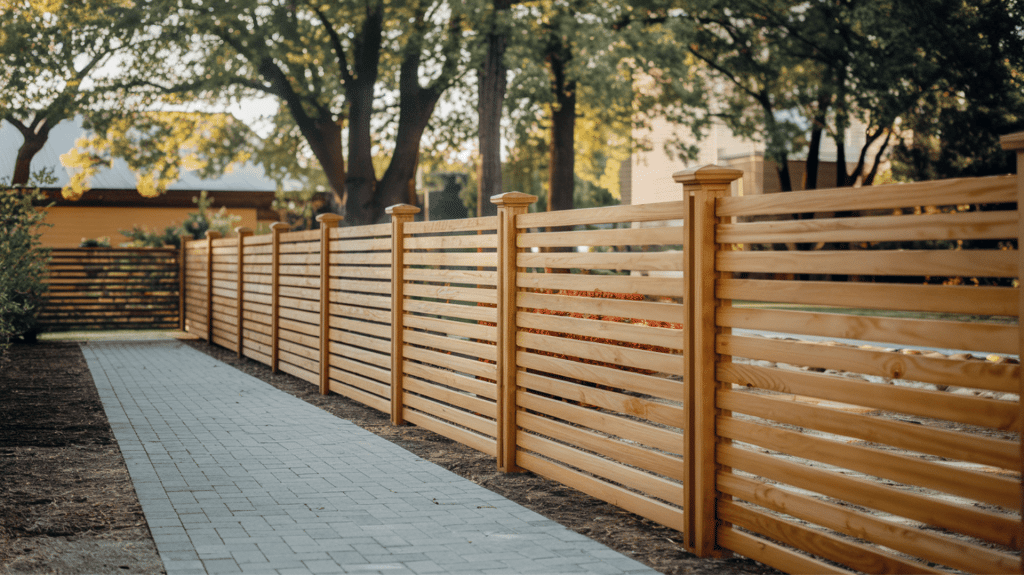
The first design for a horizontal wood fence is the simplest: evenly spaced boards that are all the same size.
In this design, you choose your spacing and board width based on personal preference and we recommend using a wider board with narrower gaps, which creates more privacy. This approach naturally draws attention to the clean lines of the fence, which are perfect for showcasing a modern look.
If you live in Phoenix, consider using a wood species that can stand up to intense sunlight, such as cedar or redwood. Proper sealing or staining will help extend its lifespan, especially in the dry Arizona climate.
Horizontal Wood Fence Design 2: Alternating Board Widths
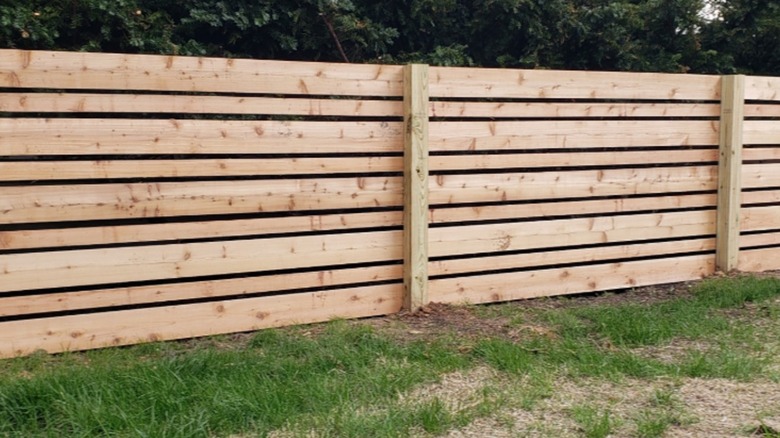 Our second horizontal wood fence design is another straightforward idea, but it achieves more visual interest by alternating board widths throughout the fence height.
In this design, the spacing between the boards remains consistent. To get the most out of this look, choose noticeably different board widths. For example, pair a 4-inch or 6-inch board with a narrower 2-inch board. This subtle change transforms a standard fence into something that really stands out, especially if you apply a stain or finish that highlights the contrasting boards.
Horizontal Wood Fence Design 3: Even Boards, Graduated Spacing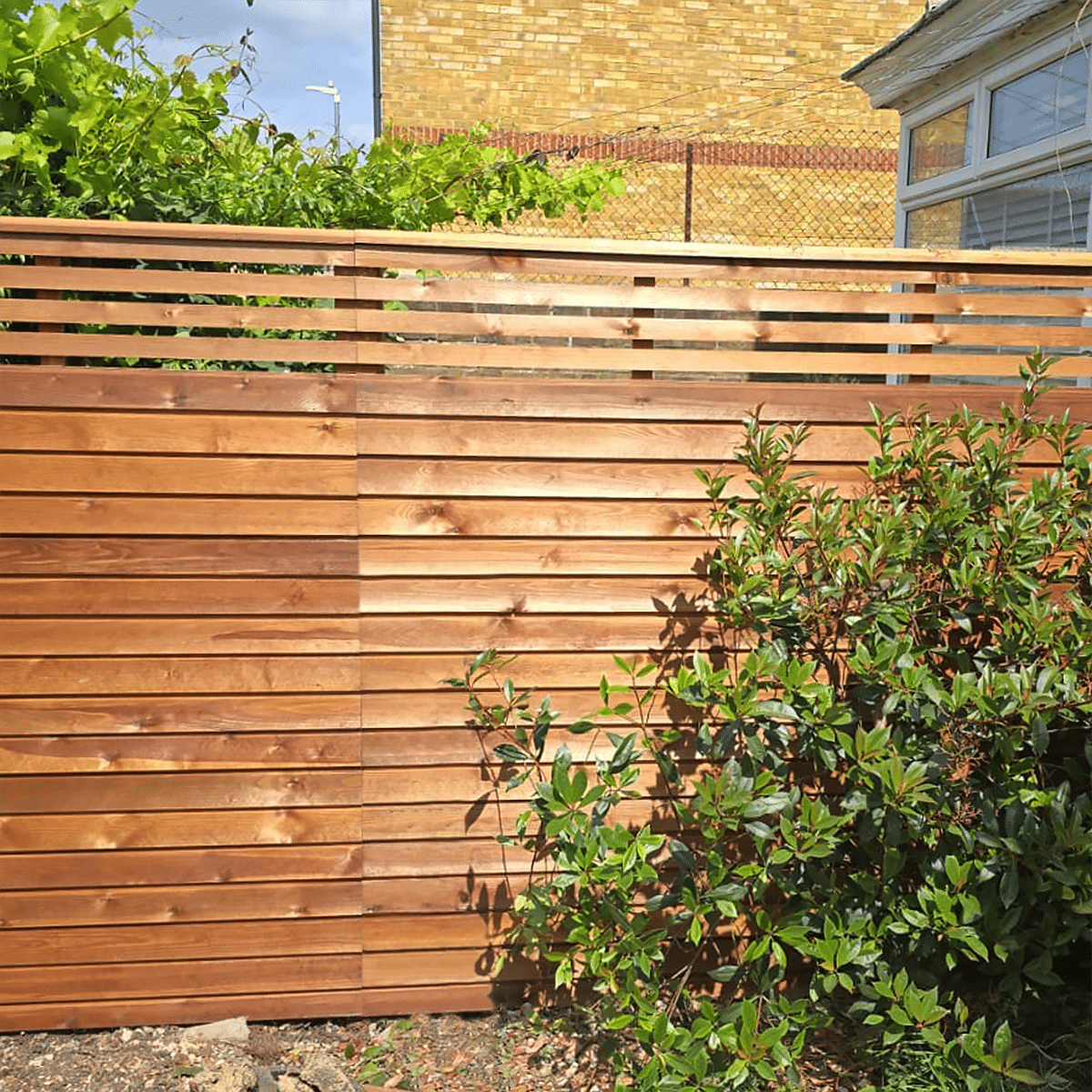
The third horizontal wood fence design uses evenly sized boards again, but the spacing between them increases as you move up the fence. You might start with boards spaced one inch apart near the bottom, then transition to two-inch spacing for the middle boards, and three inches near the top.
This design creates a visually interesting fence without changing board sizes. Keep in mind it does provide less overall privacy, so you may want to use it in the front yard, around a garden, or in areas where you still want some degree of openness. Be sure to sketch out your spacing on paper before you start building, so you can confirm it matches your fence’s height.
Horizontal Wood Fence Design 4: Even Spacing, Graduated Boards

The last design on our list uses even spacing between boards, but the board widths gradually change. As an example, you might start with several rows of 6-inch boards, move to 4-inch boards, and finish off with 2-inch boards at the top.
When using this design for fences taller than standard privacy height, place heavier or wider boards closer to ground level. This ensures more stability and helps your fence withstand Arizona’s monsoon winds. It’s a simple way to add interest with just one extra design detail: changing board widths instead of the gaps.
Small Horizontal Wood Fence Design Changes, Can Make Big Impact
Even small design tweaks, like altering board widths or spacing, can go a long way in personalizing a horizontal wood fence. Another way to make an impact is to choose an interesting stain or finish that brings out the natural grain of the wood. You could also incorporate decorative hardware, like exposed fasteners or metal accents, to complement the modern lines of your fence.
In Arizona, ongoing fence and gate maintenance is key. The intense sun and dry conditions can affect wood, so be sure to regularly seal or stain your fence to protect against cracking, warping, and fading.
Western Fence Company has extensive experience designing and installing custom fences throughout the Phoenix metro area. If you’re seeking a unique horizontal wood fence, or if you want to explore other fencing options, learn more about our Phoenix fence installation services for the perfect combination of style and functionality.